[elementor-template id="10870"]
[elementor-template id="9241"]

TESTIMONIALS

OUR PARTNERS

[elementor-template id="1877"]
[elementor-template id="7496"]
[elementor-template id="11617"]
Seborrheic dermatitis is a skin condition that mainly affects the scalp causing scaly patches, inflamed skin and stubborn dandruff. It usually affects oily areas of the body, such as the face, sides of the nose, eyebrows, ears, eyelids and chest leading to progressive hair loss from these regions.
Seborrheic dermatitis is strongly associated with hair loss, however, it is typically not the primary cause. Hair loss in Seborrheic dermatitis may happen due to:

Inflammation

The inflammation associated with seborrheic dermatitis can affect the hair follicles, leading to a condition known as “telogen effluvium.” This condition causes more hair than usual to enter the resting phase of the hair growth cycle, resulting in hair shedding.

Itching and Scratching

The itching caused by seborrheic dermatitis can lead to vigorous scratching of the affected areas, including the scalp. This scratching can damage hair follicles and potentially lead to hair loss.

Oily Scalp

Seborrheic dermatitis is often associated with excessive oil production on the scalp. This excess oil can contribute to hair loss by clogging hair follicles, which can inhibit hair growth.

Infection

Factors like an individual’s age, genetics, and overall health can influence the degree of hair loss experienced during chemotherapy. Some people may experience only mild hair thinning, while others may lose most or all of their hair.
It’s important to note that seborrheic dermatitis can be a chronic condition, and it may require ongoing management to keep symptoms under control. Some of the existing available therapies for managing seborrheic dermatitis are:

Medications

Topical products containing active ingredients like ketoconazole, coal tar, salicylic acid, or selenium sulfide can help control the flaking and inflammation. In severe cases, stronger topical corticosteroids, antifungal creams, or other medications are required to manage the condition.

Minoxidil

Minoxidil is a standard hair regrowth therapy used topically or orally for the treatment of hair loss. It is a potent vasodilator that acts by providing increased blood supply and thereby, more nutrition to the hair follicle.

Finasteride

Finasteride is a prescription medication that may be considered for men with seborrheic dermatitis-induced hair loss. It helps prevent the conversion of testosterone to dihydrotestosterone (DHT), which is associated with hair loss.

Hair and Scalp Care

Using mild, fragrance-free hair products and avoiding excessive heat styling or chemical treatments that may further damage fragile hair helps in preventing any further hair loss.

The QR678® in Seborrheic Dermatitis Induced Hair Loss:

The QR678 research & development platform technology is a proprietary first-in-class technology. This science backed technology is giving rise to multiple products that arrest hair fall and address the thickness, density of hair follicles leading to greater coverage in hair loss. This R&D technology deals with multiple human hair growth related growth factors that are naturally present in our scalp making products derived from these completely natural. Research on this platform technology has resulted in this being awarded USA & Indian patents and has led to over 13+ clinical research papers being published with products derived from this unique technology. The hair growth factors penetrate deep into the scalp and provide nourishment to the scale. Unlike other treatments that contains harmful medication, products derived from QR678 are almost completely devoid of side effects.

Clinical Evidence in Seborrheic Dermatitis Induced Hair Loss

Clinical Trial Data

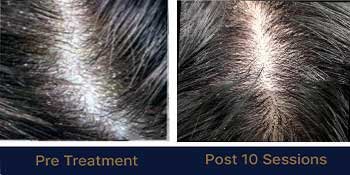
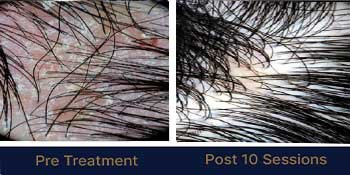
To check the efficacy of QR678® in the management of hair loss induced due to seborrheic dermatitis, a prospective clinical study was conducted that included 40 male and female patients with seborrheic dermatitis. 1 mL solution of QR678® was administered in the scalp skin of all patients at 3-week interval till eight sessions. Patients were advised to continue with antifungal shampoo and topical antifungal solution with steroid combination which they had been on during the treatment. Assessment of disease severity, dermoscopic evaluation, and self-assessment were done at baseline, at the end of the fourth session and the eighth sessions. The study demonstrated an improvement in Adherent Scalp Flaking Score (ASFS) after the eighth session (mean = 12) as compared to that of baseline (mean = 60). The dermoscopic evaluation showed a noticeable difference from baseline (mean = 11) in erythema and scaling with the Seborrheic Dermatitis Scalp Severity Index tool at the end of treatment (mean = 2). A high satisfaction score was given for the efficiency in the self-assessment questionnaire. The study demonstrated that treatment with QR678® led to an improvement in the overall scalp condition by the resolution of flaking and inflammation of scalp thereby preventing hair loss and causing hair regrowth..

[elementor-template id="12798"]