[elementor-template id="10870"]
[elementor-template id="9241"]

TESTIMONIALS

OUR PARTNERS

[elementor-template id="1877"]
[elementor-template id="11617"]
Chemotherapy is the most implicated treatment therapies for cancer that comes with a plethora of challenges such as lengthy intervals of therapy including several appointments, prolonged hospitalization, and numerous adverse effects involving nausea, vomiting, diarrhea, exhaustion, lack of appetite, and alopecia.
Knowing that hair is a major indicator of physical appearance, attraction, and unique personality, hair loss adversely affects the feeling of identity, perception of body image, and self-esteem that contributes to self-disappointment and low post-treatment amendment. Hair loss is a major source of stress for people with cancer. This type of hair loss is also called Chemotherapy-Induced Alopecia (CIA).
The following mechanism of chemotherapy causes hair loss:

Toxic Effects on Hair Follicles

Male pattern baldness is caused by elevated levels of dihydrotestosterone (DHT) hormone. Dihydrotestosterone is a metabolic product of the conversion of free testosterone by 5-alpha reductase. DHT causes the progressive shrinkage of hair follicles which may eventually lead to their becoming dormant.

Cellular Damage

Chemotherapy drugs can cause damage to the DNA of hair follicle cells. This damage can lead to the hair follicles entering a dormant or resting phase, which ultimately results in hair loss.

Anagen Effluvium

Chemotherapy drugs primarily affect hair follicles in the anagen (growth) phase of the hair growth cycle. This leads to a sudden and widespread shedding of hair. Because hair follicles in this phase are actively producing hair, they are more susceptible to the effects of chemotherapy.

Patient Factors

Factors like an individual’s age, genetics, and overall health can influence the degree of hair loss experienced during chemotherapy. Some people may experience only mild hair thinning, while others may lose most or all of their hair.

Male baldness hair regrowth is a problem that clinicians and cosmetologists have been investigating for a long time. Some of the therapies available for male baldness hair regrowth are as follows:

Scalp Cooling (Cold Cap Therapy)

Scalp cooling systems can help reduce hair loss during chemotherapy. These caps are designed to lower the temperature of the scalp, which in turn narrows the blood vessels and reduces the amount of chemotherapy that reaches the hair follicles.

Minoxidil

Minoxidil is a standard hair regrowth therapy used topically or orally for the treatment of hair loss. It is a potent vasodilator that acts by providing increased blood supply and thereby, more nutrition to the hair follicle.

Laser Therapy

Some patients explore low-level laser therapy (LLLT) devices, which are FDA-approved for promoting hair growth. However, the effectiveness of these devices in preventing or treating chemotherapy-induced hair loss is still under investigation.

Hair and Scalp Care

Using mild, fragrance-free hair products and avoiding excessive heat styling or chemical treatments that may further damage fragile hair helps in preventing any further hair loss due to chemotherapy.

The QR678® in Post Chemotherapy Hair Loss:

The QR678 research & development platform technology is a proprietary first-in-class technology. This science backed technology is giving rise to multiple products that arrest hair fall and address the thickness, density of hair follicles leading to greater coverage in hair loss. This R&D technology deals with multiple human hair growth related growth factors that are naturally present in our scalp making products derived from these completely natural. Research on this platform technology has resulted in this being awarded USA & Indian patents and has led to over 13+ clinical research papers being published with products derived from this unique technology. The hair growth factors penetrate deep into the scalp and provide nourishment to the scale. Unlike other treatments that contains harmful medication, products derived from QR678 are almost completely devoid of side effects.

Clinical Evidence in Post Chemotherapy Induced Hair Loss

Clinical Trial Data

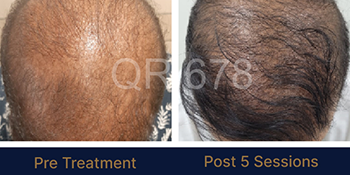
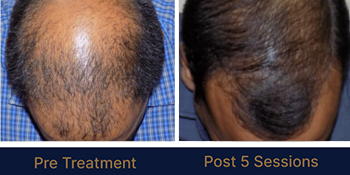
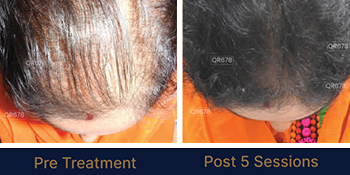
A prospective pilot study(Kapoor et al., 2020) was conducted to evaluate the efficacy of QR678 in chemotherapy-induced alopecia in subjects treated with cytotoxic chemotherapy for lung and breast cancer. A total of 20 subjects included males (n=8) with a history of lung cancer and females (n=12) with a history of breast cancer in the age range of 25-60 years with Grades I and II of Alopecia according to WHO classification. The patients were administered with 1.5mL of QR678 solution with mesotherapy in the scalp for a total of 8 sessions performed 3 weeks apart. The evaluation was done at baseline, 6 months and 1 year using standard global photography and videomicroscopic assessment.

Reviewers evaluated each photograph on a scale of 0 to + 10, where 0 shows no progress and 10 shows highest growth. The mean value at the baseline was 4. Marked improvement was seen in the global assessment score at 6 months (mean = 8) which was maintained even after 1 year. Hair count (per cm2) was evaluated by videomicroscopic assessment for every patient at 20 cm from the glabella. There was a significant increase in the mean value at 6 months and 1 year as compared to baseline.

[elementor-template id="12798"]